Focused on Parks Facilities? Click here to see our parks focused site.

What Gym Equipment Do Prisons Use and Why It Matters for Safety
The question “What gym equipment do prisons use?” is one of the most searched and most misunderstood topics in correctional fitness.
People often assume that prison gyms look like commercial fitness centers with treadmills, weight machines, racks of dumbbells, and benches. In reality, the equipment used in prisons is different.
Correctional environments require tamperproof, ultra-durable, bodyweight-driven fitness systems built specifically for high-volume use, strict security protocols, and unsupervised or semi-supervised environments. Safety, not variety, is the foundation of correctional fitness design, and the equipment must reflect that.
Outdoor-Fit manufactures the correctional-grade equipment used by over 700 correctional facilities across North America. By engineering out every vulnerability, like exposed hardware or removable components. Our systems provide safe, secure, high-value exercise opportunities that support inmate rehabilitation and facility safety.
This article explains exactly what gym equipment prisons use, why correctional equipment must be different, and how facilities choose the safest systems for their recreation yards. For additional answers to correctional-related topics, visit our FAQ page.
Why Prison Fitness Equipment Must Be Different From Commercial Gym Equipment
Commercial gym machines are not built for secure environments. Their removable pins, open weight stacks, unprotected cables, adjustable plates, upholstery, and exposed mechanical parts create opportunities for tampering, concealment, or misuse when these components aren’t reinforced or enclosed. They also require frequent maintenance — something correctional facilities cannot depend on in high-volume, unpredictable settings.
Correctional fitness equipment, by contrast, must be engineered to a completely different standard:
- Extreme durability: heavy-gauge steel construction capable of withstanding years of daily use.
- Tamperproof engineering: no removable parts, access points, or exposed hardware.
- Safety-first design: all cables, belts, weight plates, and moving parts are engineered with hardened, tamperproof, enclosed systems to prevent breakage or misuse. High user capacity: multiple people must be able to work out simultaneously without creating crowding or blind spots.
- Weatherproof materials: outdoor installations must withstand heat, cold, moisture, corrosion, and UV exposure.
- Low maintenance: equipment must remain safe and functional without the need for specialized repairs.
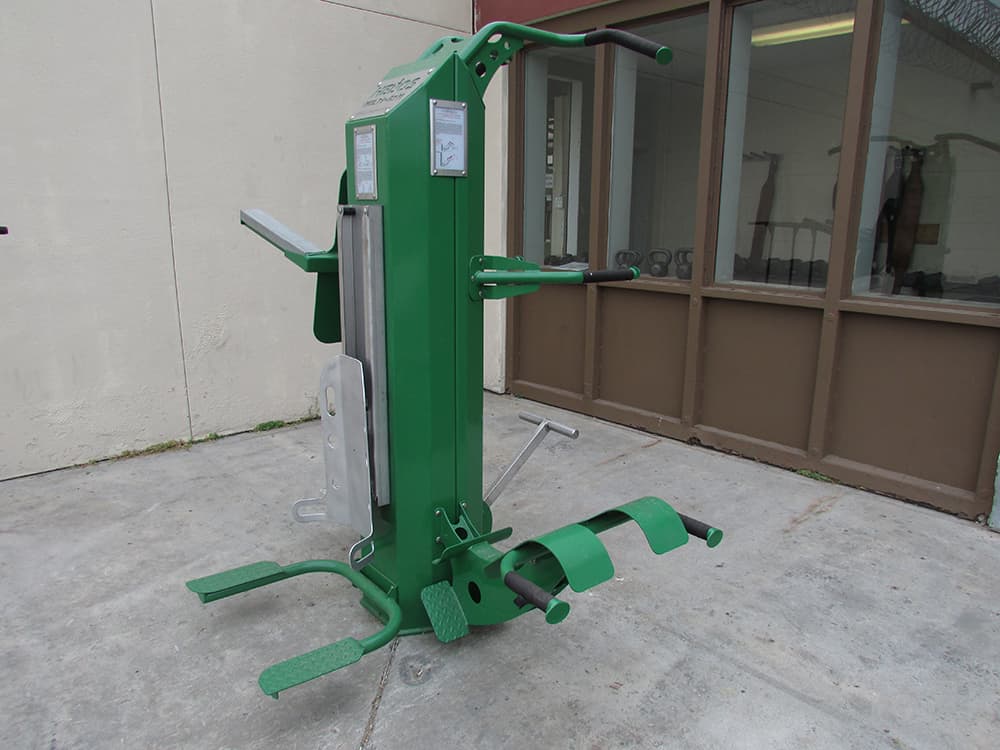
Because of these requirements, correctional facilities need gym equipment that is built for higher security. They use purpose-built systems that provide real fitness value while removing the risks found in traditional commercial machines. The same durable and low-maintenance designs are also used in parks and public spaces, but in correctional environments, this level of security is essential.
The Most Common Gym Equipment Used in Prisons
While every facility is different, correctional gyms across North America rely on the same category of equipment: secure, tamperproof, bodyweight-based multigyms and stations engineered for durability and safety. Below is an overview of the equipment categories most frequently found in prisons and jails.
Multi-User Bodyweight Training Systems
Multi-user fitness stations are the cornerstone of correctional recreation areas. They provide the highest exercise value per square foot and are the safest option for secure environments.
Titan Multigym
The Titan Multigym is a compact, cost-effective, and completely static five-station unit designed for smaller yards, indoor spaces, and higher-supervision environments. With no moving parts, no exposed hardware, and no adjustment mechanisms, it delivers predictable and secure movement patterns for users of all fitness levels. It is fully weatherproof and tamperproof, built from high-quality materials, and tested to withstand heavy use in all climates year-round.
Helios Multigym
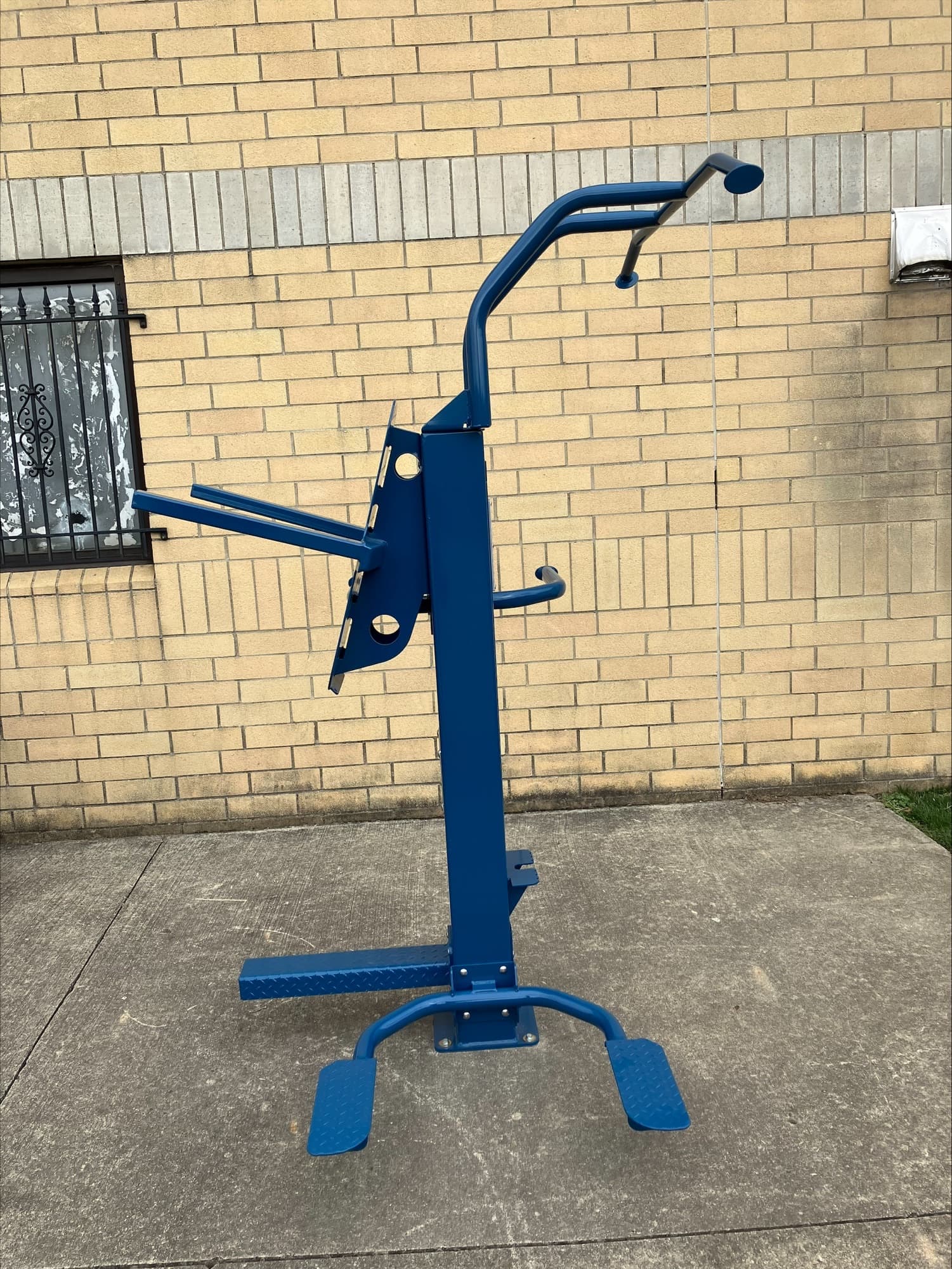
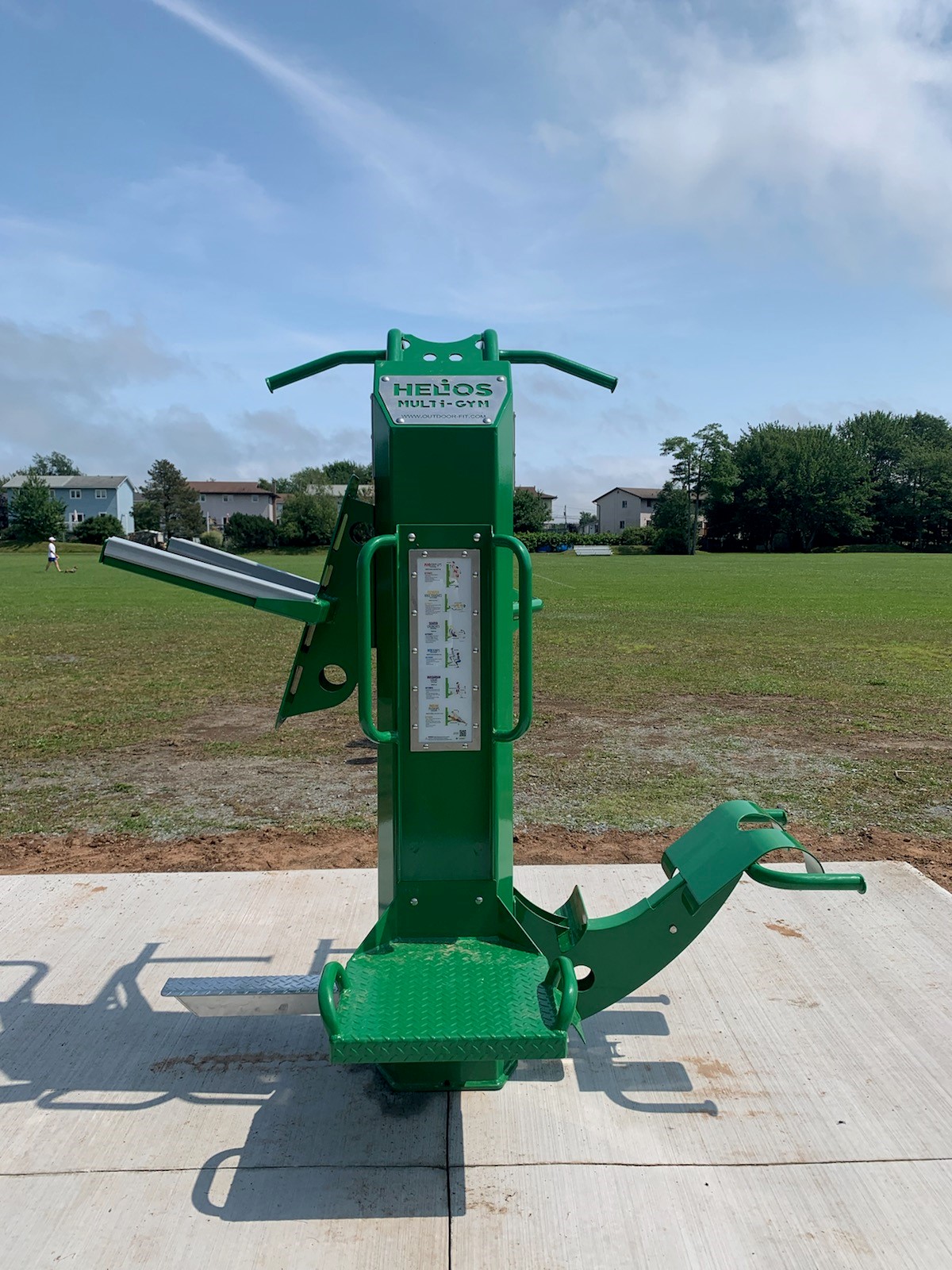
This five-station Helios multigym, engineered with heavy-gauge steel and fully welded construction, is a trusted choice for correctional facilities. Designed with the same exercise principles as indoor commercial equipment, it offers a full, functional workout through multiple bodyweight stations. The built-in assist feature also makes pull-ups and dips accessible for users of different ages and fitness levels.
Everest Cardio Climber
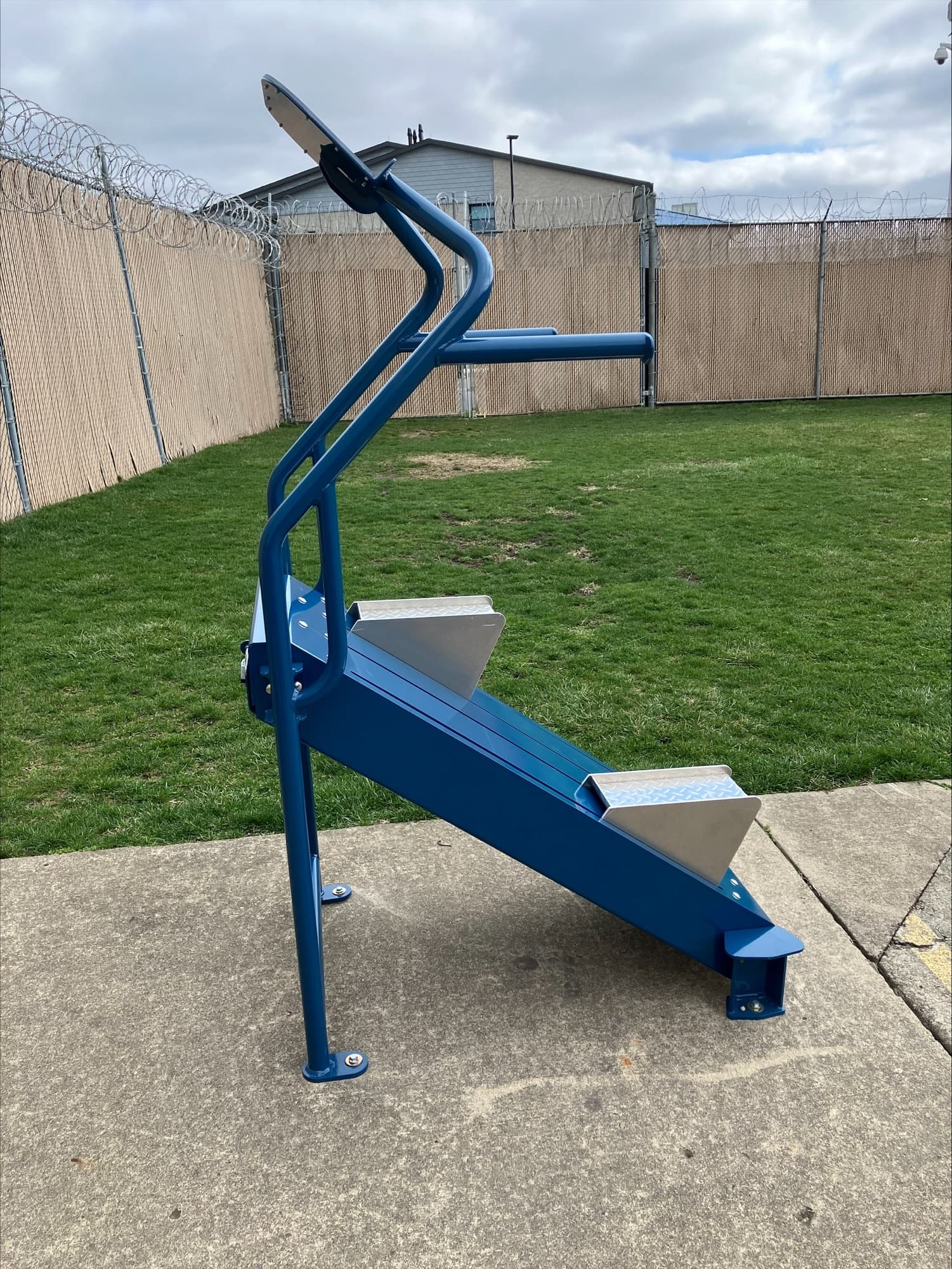
Traditional cardio machines, like treadmills, ellipticals, and steppers, are not appropriate for prisons due to motors, moving parts, and removable electronics. The Everest Cardio Climber solves this by providing a full-body cardio workout. The climber delivers elevated heart-rate conditioning, weight-management benefits, and stamina development, while remaining fully vandal-resistant.
Calisthenics Stations
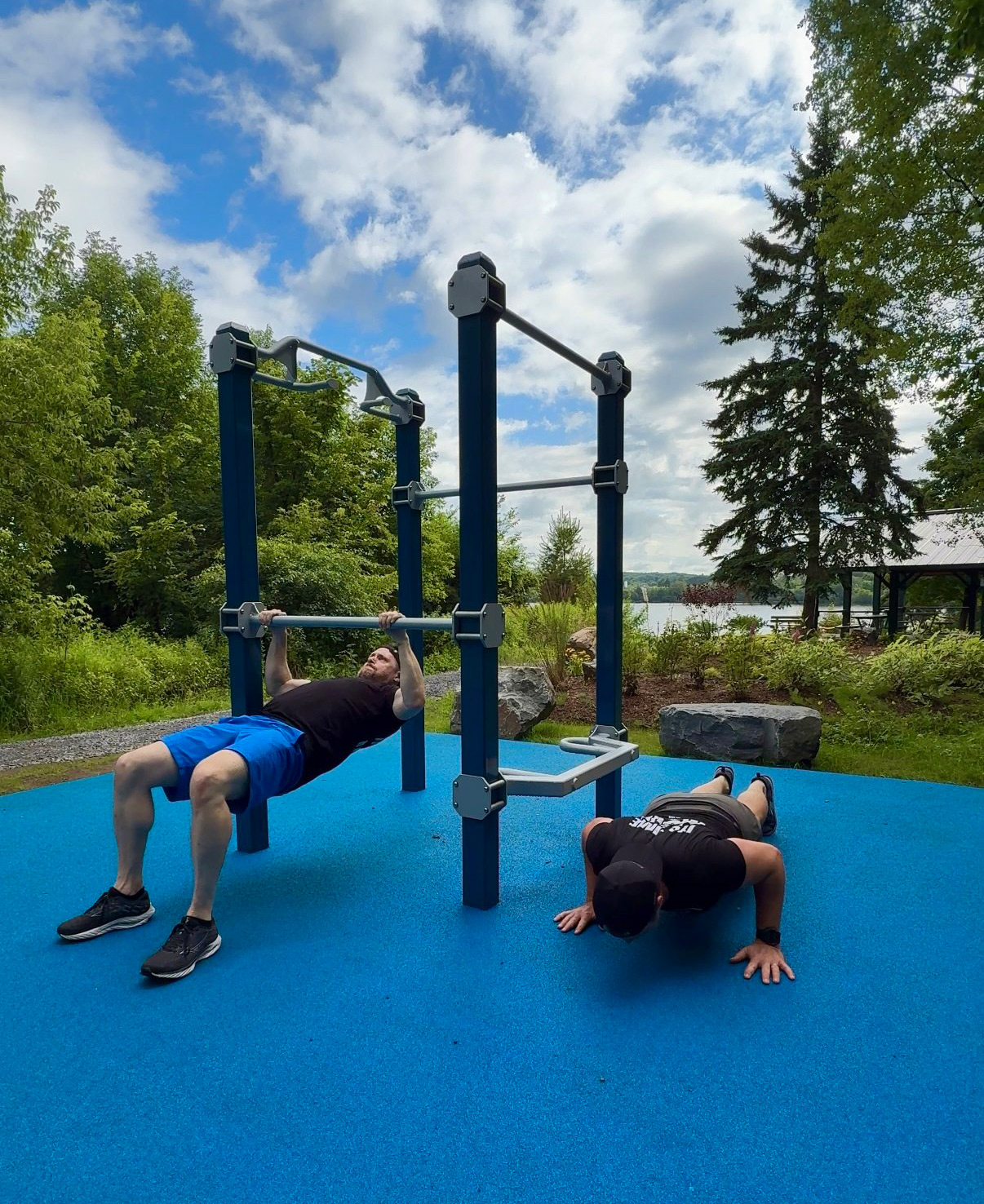
Basic bodyweight stations remain a crucial part of correctional fitness because they are simple and secure, require no maintenance, accommodate all skill levels and allow for structured group workouts. The example is Outdoor-Fit’s newest innovation: the Cali-Line, engineered to meet the highest security, safety, and performance standards required for institutional environments of all security levels and population sizes. Every station in the Cali-Line is 100% static, with no moving parts. Each unit is backed by a 15-year structural warranty – giving correctional facilities’ management peace of mind and long-term reliability.
Why Tamperproof Design Matters More Than Any Other Feature
Tamperproof engineering is the single most important aspect of prison fitness equipment. In correctional environments, the most common risks associated with traditional fitness equipment include:
- Removable bolts, pins, plates, or cables
- Exposed mechanical systems
- Bending, breaking, or manipulation of moving parts
- Access to interior components
- Concealment of contraband inside hollow frames or housing
- Weaponization potential
By eliminating these vulnerabilities, Outdoor-Fit systems make recreation predictable, safe, and easy to supervise, allowing facilities to run regular fitness programs without compromising security.
Learn More or Plan Your Next Steps
Creating a safer, more reliable correctional gym starts with choosing equipment built for high security. If you're planning a new yard or upgrading existing spaces, explore our resources for practical guidance on equipment selection, procurement, and design.
Procurement Guide: Purchasing Fitness Equipment for Correctional Facilities
Tamperproof vs. Traditional Fitness Equipment
FAQ: What Gym Equipment Prisons Use & How Correctional Fitness Works
Do prisons really have gyms?
Yes. Most prisons in North America provide some form of fitness area, whether an outdoor yard, an indoor workout room, or a combination of both. These spaces are designed to support physical health, reduce stress, improve behaviour, and provide structured activity for inmates. They are not commercial-style gyms; instead, they are equipped with tamperproof systems built specifically for secure environments, where safety and supervision are essential.
Why don’t prisons use weights, treadmills, or traditional gym machines?
Free weights, benches, treadmills, and commercial exercise machines contain removable components, motors, electronics, plates, pins, and cables that create significant safety and tampering risks. They also require frequent maintenance and repairs that correctional environments cannot reliably support. Instead, prisons use bodyweight-based, tamperproof equipment engineered with sealed components and heavy-gauge steel to ensure predictable, safe operation at all times.
How is prison gym equipment different from regular gym equipment?
Correctional gym equipment is engineered with no removable parts, no exposed hardware, fully welded heavy-gauge steel construction, and internal locking systems that prevent access to internal components. It uses bodyweight-driven, biomechanically sound movement patterns instead of traditional weight stacks or cables. This makes it vandal-resistant, weatherproof, and suitable for high-volume, unsupervised use. These are the requirements that commercial fitness equipment cannot meet.
Is outdoor or indoor prison fitness safer?
Outdoor fitness areas typically allow for better visibility, ventilation, and line-of-sight supervision, making them ideal for many correctional environments. Indoor rooms can also be safe when equipped with tamperproof systems and designed with clear visibility in mind. In both cases, safety depends more on the equipment and layout than the location itself.
How do correctional facilities choose the right gym equipment?
Administrators typically evaluate equipment based on security, durability, accessibility, physical conditioning value, maintenance requirements, and the ability to support structured programming. Tamperproof engineering and long-term reliability are essential. Outdoor-Fit provides full installation guides, site planning resources, and support to help facilities design safe, effective recreation spaces.