Focused on Parks Facilities? Click here to see our parks focused site.

Designing Safe Correctional Gyms: Tamperproof Solutions That Last
Designing a correctional gym is different from designing any other fitness space. Safety, supervision, durability, and long-term maintenance are non-negotiable. Every piece of equipment must withstand heavy use, eliminate vulnerabilities, and operate reliably in a high-security environment.
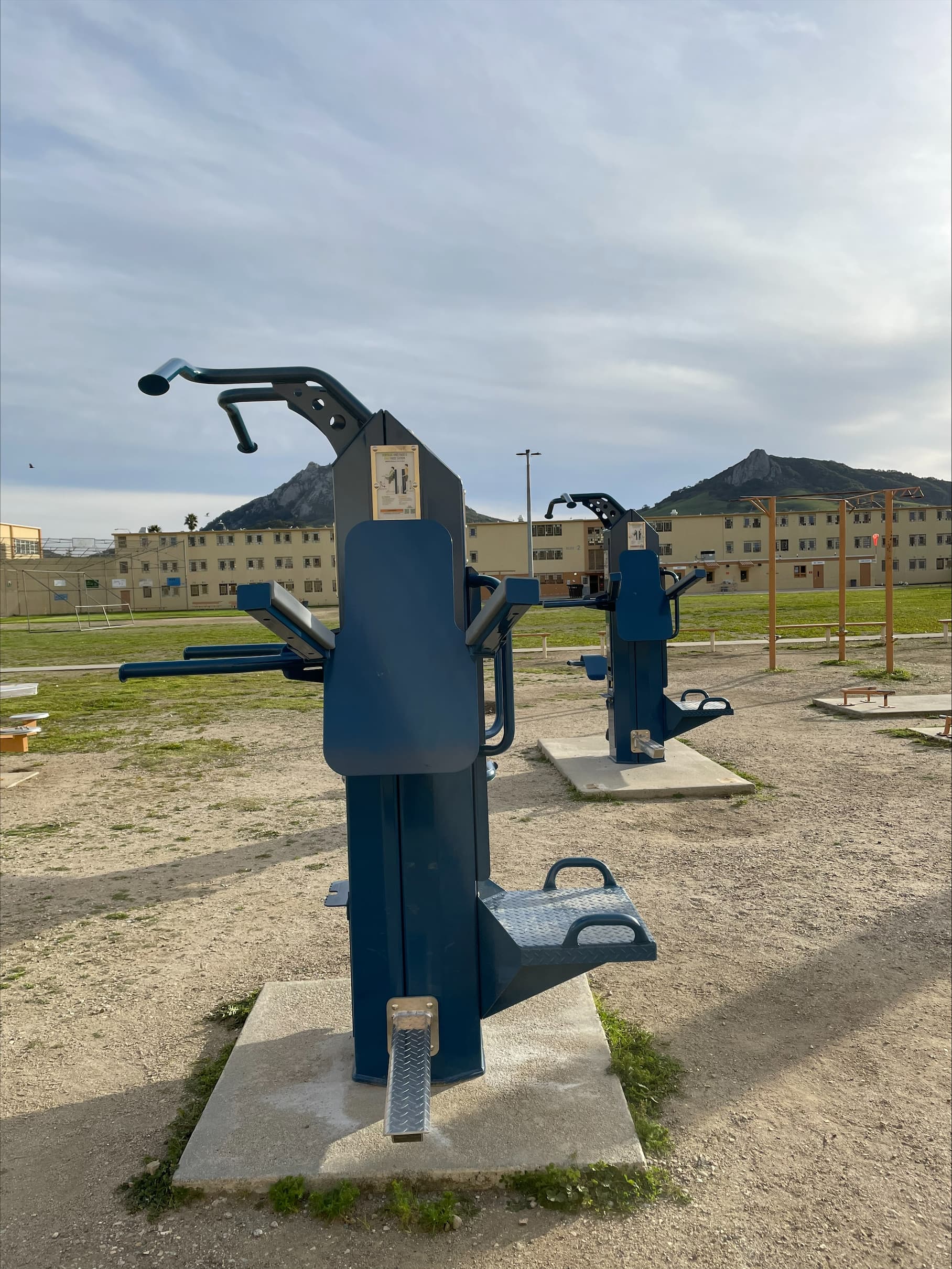
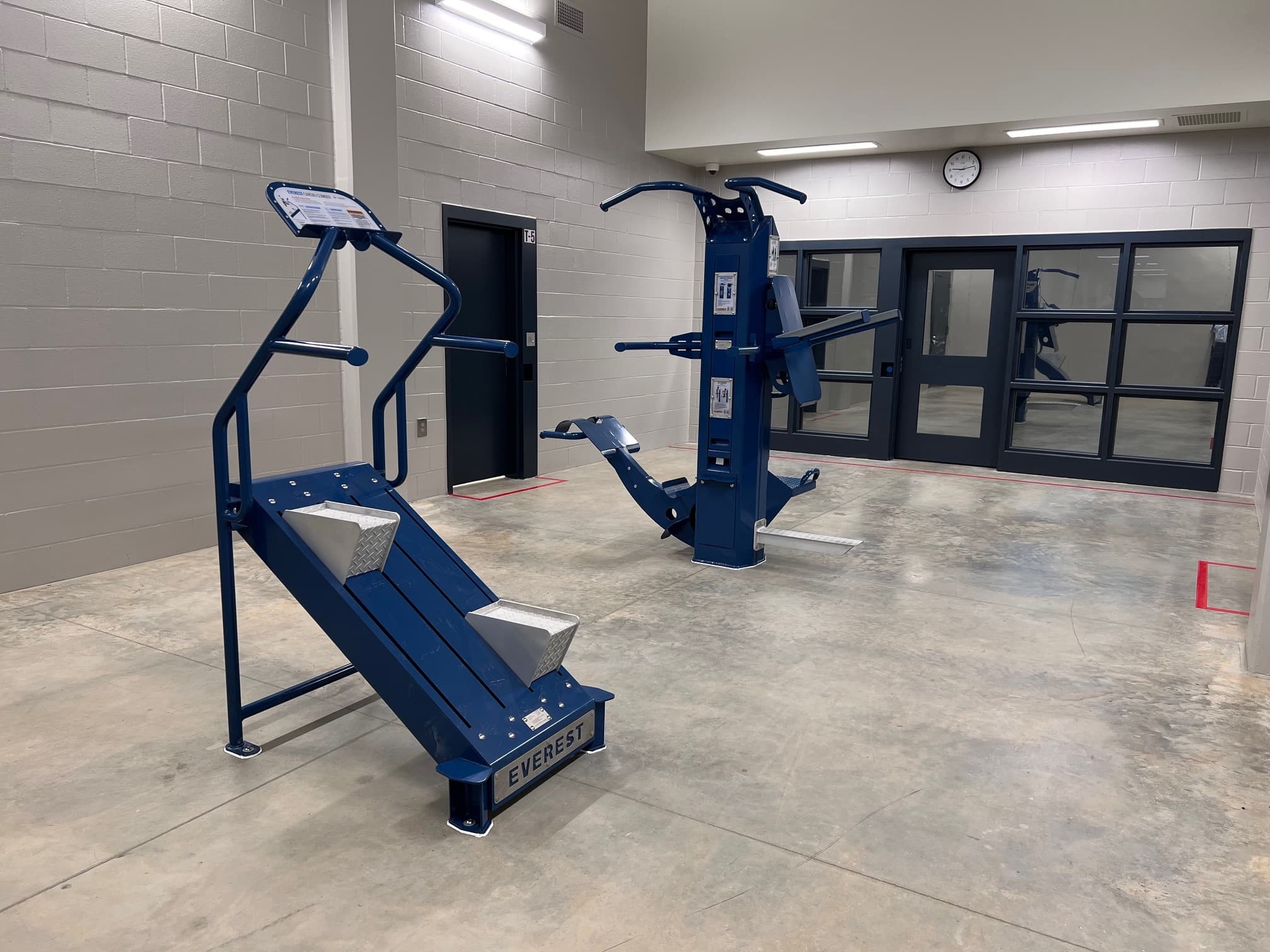
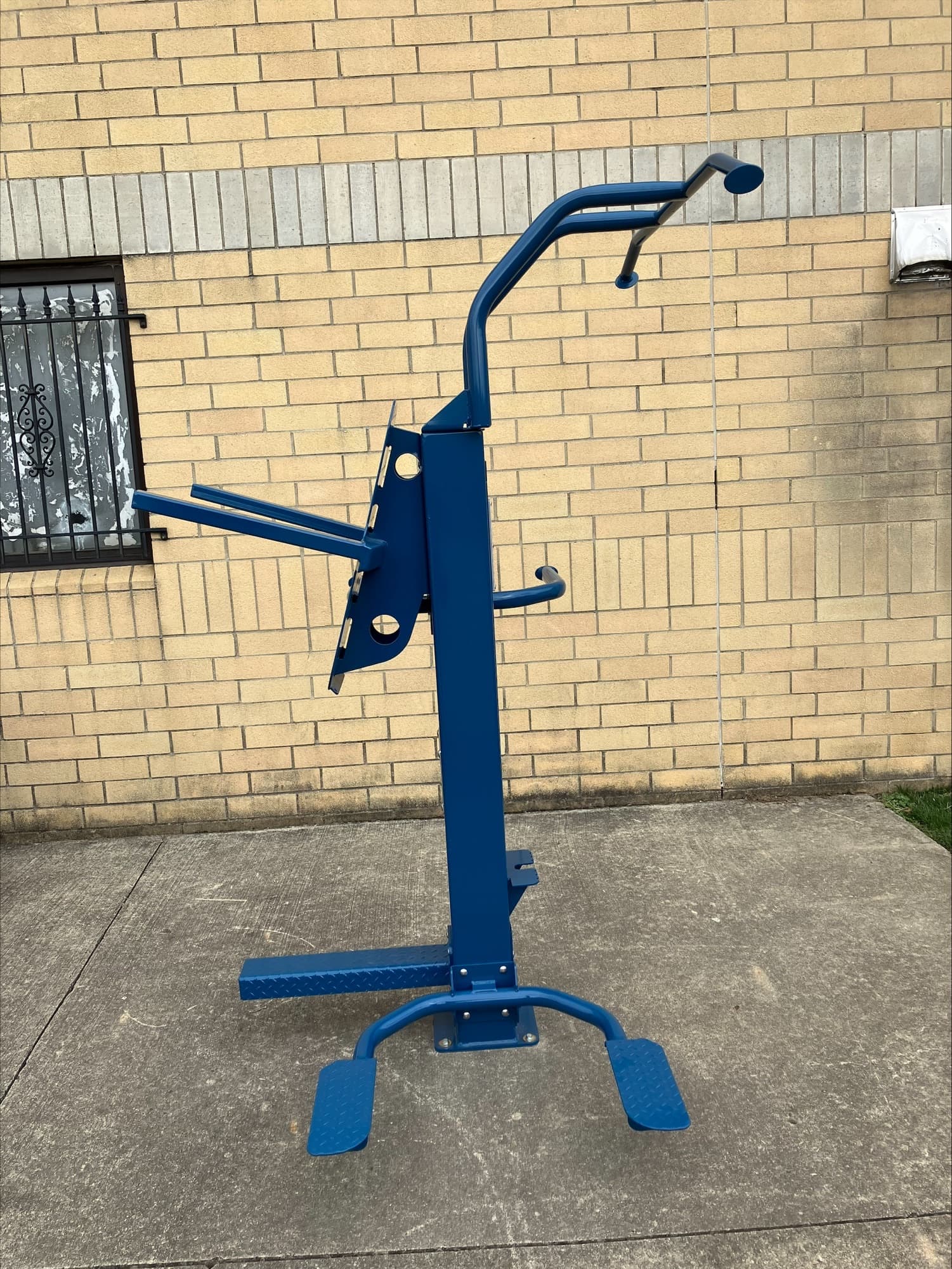
Outdoor-Fit designs correctional exercise equipment purpose-built for these realities — tamperproof, weatherproof, and engineered for real exercise value with no exposed hardware, using sealed moving parts, and heavy-gauge structural steel.
Why Tamperproof Design Matters in Correctional Gyms
Correctional environments demand equipment that reduces risk at every level.
Learn more about the difference between Traditional vs. Tamper-Resistant Fitness Equipment
1. No exposed or removable hardware
Outdoor-Fit equipment uses only tamperproof stainless-steel Torx fasteners and rounded-head bolts. All internal mechanisms are sealed, preventing removal or repurposing.
2. Heavy-duty construction that resists abuse
Every system is constructed with 3/16”, 3/8”, and 1/8” thick steel, built to resist vandalism, impact, and high-volume daily use.
3. Hardened components with no exposed pinch points
Our correctional exercise equipment provides full-body workouts using enclosed, tamperproof, and reinforced systems that remove the risks found in traditional commercial gym machines.
4. Weatherproof and corrosion-resistant finishes
All equipment is finished with a zinc-rich primer and a UV-resistant polyester powder coat, ensuring year-round and multi-year performance outdoors or indoors.
How to Lay Out a Safe Correctional Fitness Space
Designing a correctional gym is as important as choosing the right equipment. A well-planned layout supports supervision, reduces blind spots, improves inmate flow, and reinforces the overall safety strategy of the facility. In correctional settings, the layout of the fitness area can directly influence behavioural outcomes and incident prevention.
Below is a deeper, more comprehensive breakdown used by correctional planners across North America.
Step 1: Create Clear Lines of Sight
Correctional fitness areas must allow full, uninterrupted visibility for staff at all times. This includes:
- Central placement of equipment, never against walls or fences that create concealment points.
- Avoiding “shadow zones” behind frames, benches, or fixed structures.
- Orienting multigyms so all stations are outward-facing, enabling quick visual assessment of activity.
- Maintaining appropriate spacing between stations to prevent clustering where supervision becomes difficult.
- Clear sightlines reduce risk, improve incident response times, and support predictable inmate behavior.
Step 2. Use Compact, Multi-User Systems
In correctional environments, equipment density is a risk multiplier. Outdoor-Fit equipment solves this by:
- Supporting 2–5 users simultaneously on a single multigym.
- Delivering multiple exercise stations without creating complex, crowded spaces.
- Allowing staff to supervise more people with fewer blind spots and less movement across the yard.
- Reducing the number of anchoring points, which simplifies installation and long-term maintenance.
A compact, multi-user layout ensures maximum recreation value without compromising safety or staff oversight.
Step 3. Choose Bodyweight-Driven Movement Patterns
Bodyweight systems are the gold standard for correctional fitness because they:
- Eliminate cables, pins, plates, and weight stacks — the most common sources of tampering and mechanical failure.
- Reduce repair cycles and minimize downtime, ensuring consistent access to structured exercise.
- Provide predictable, biomechanically correct movement patterns suitable for all fitness levels.
- Reduce liability by removing complex moving components and pinch points.
Outdoor-Fit’s correctional equipment is engineered around safe, repeatable movement, ensuring high exercise value without introducing avoidable risk.
Step 4: Position for High Visibility and Controlled Entry/Exit
A secure correctional fitness space should always be designed with predictable flow:
- Keep entry and exit routes clear and visible, enabling staff to maintain awareness of who is entering or leaving the area.
- Avoid placing equipment near gates, doors, or perimeter fencing where congregation becomes a risk.
- Maintain consistent spacing to prevent crowding, obstruction, or unsupervised grouping.
- Use the natural shape of the space to direct flow, allowing staff to monitor the entire space from one or two fixed positions.
This predictable layout reinforces behavioural expectations and makes the area easier and safer to monitor.
Step 5. Ensure Adequate Perimeter Space
Correctional-grade design always includes buffer zones:
- Maintain a minimum clearance radius around each multigym for safe movement.
- Avoid narrow corridors between equipment installations.
- Allow enough room for ADA-friendly circulation, where required.
- Provide room for staff response if an intervention is necessary.
Perimeter spacing is part of the facility’s security architecture, ensuring the fitness area integrates into broader operational protocols.
Step 6. Consider Indoor vs. Outdoor Placement
Whether installed indoors or outdoors, correctional planners typically consider:
- Outdoor installation for enhanced ventilation and supervision
- Indoor installation where climate or space restrictions require a controlled environment
- Load-bearing requirements for anchoring into concrete
- Durability of finishing systems (zinc-rich primer + UV-resistant powder coat)
Outdoor-Fit systems are designed for both scenarios, with tamperproof hardware and corrosion-resistant materials suitable for all North American climates.
Recommended Equipment for Correctional Gyms
The Spartan Multigym
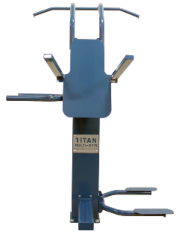
The Titan Multigym
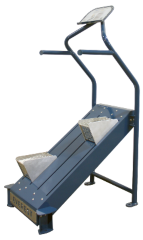
The Everest Cardio Climber
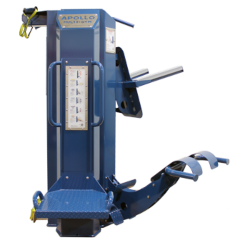
The Atlas Multigym
Ready to Build a Safer, More Efficient Correctional Gym?
If you’d like to learn more about how secure, tamperproof exercise equipment performs in real correctional environments, explore our FAQ page for clear answers to the questions administrators ask most often.
Planning a new gym or upgrading an existing one?
Our team can help you compare equipment options, review layout plans, and choose the most durable and tamperproof solutions for your facility.
Read the Procurement Guide: Purchasing Fitness Equipment for Correctional Facilities
View: Correctional Facility Exercise Equipment – Built for Security & Durability
FAQs: Tamperproof Gym Design for Correctional Facilities
1. Do prisons have gyms?
Yes. Most medium- and high-volume correctional facilities in North America provide some form of gym or exercise yard. These spaces are typically located outdoors for better visibility and ventilation, although many facilities also maintain indoor recreation rooms, day rooms, or multipurpose fitness areas.
2. What gym equipment do prisons use?
Prisons typically use tamperproof, detention-grade fitness equipment engineered to remove risks associated with traditional commercial machines. These systems prioritize durability, enclosure of moving parts, and the elimination of removable hardware — while still offering full-body strength training.
Common examples include:
Pull-up bars, dip stations, and chin-up towers
Multi-user outdoor gyms such as the Helios, Apollo, Vulcan, Spartan, Titan, and Atlas multigyms
Modular stations from the Cali-Line series, designed with enclosed and tamperproof resistance mechanisms
Traditional commercial machines with exposed cables, open weight stacks, or removable pins are not suitable unless those components are fully enclosed, hardened, and engineered for correctional environments — a key distinction reflected in Outdoor-Fit’s jail gym equipment.
3. How is prison gym equipment different from regular gym equipment?
Correctional fitness equipment is engineered to eliminate vulnerabilities:
No removable parts
All cables, belts, and weight stacks are fully enclosed and tamperproof
No exposed hardware
Heavy-gauge steel construction (3/16”, 3/8”, and 1/8”)
Tamperproof stainless-steel Torx fasteners
Rounded-head bolts and sealed mechanisms
Internal locking systems
Powder coating for extreme weather durability
This design ensures the equipment is safe, secure, and able to withstand heavy daily use.
4. Why does tamperproof design matter in correctional facilities?
Tamperproof design protects both inmates and staff by eliminating:
Parts that could be removed or repurposed
Weaponization risks
Concealment points
Pinch points and entrapment hazards
Repair-related downtime
Tamperproof fitness systems maintain consistent, predictable operation — a key requirement in secure environments.
5. Are free weights allowed in prisons?
In most correctional facilities, no. Free weights introduce safety and security risks, including shared-space misuse, difficulty supervising movement patterns, and increased injury risk. This is why Outdoor-Fit equipment is designed to deliver full-body workouts without free weights.