
How Juvenile Detention Centers Can Build Safer, Smarter Fitness Areas
Fitness and recreation areas in juvenile detention centers are often regarded by administrators as more essential than in adult correctional facilities. While the security and durability of fitness equipment in these facilities remain critical, there is also a strong emphasis on rehabilitation, physical development, and the building of positive habits.
Modern juvenile detention centers have recreation areas that do much more than simply provide physical activity. They can help reduce stress, support behavior improvement, encourage structure, and introduce healthy routines that can last a lifetime.
Designing Fitness Spaces for Juvenile Populations
Different Population, Different Needs
Due to their age and the fact that they are still growing, incarcerated juveniles have very different needs than incarcerated adults. Recreation areas must account for different levels of maturity, confidence, knowledge, and experience.
Many juveniles who enter a detention facility may have:
- No experience using fitness equipment
- No understanding of proper exercise biomechanics to avoid injury
- Minimal physical abilities and athletic backgrounds
- Low confidence
Juvenile detention fitness equipment used in recreation areas must prioritize guidance, accessibility, and simplicity while maintaining the same level of durability and safety as in an adult facility.
Unlike adults, who likely have more experience in a gym, juveniles often require more guidance and instruction when exercising. Without proper guidance, equipment can be misused, injuries may occur, or participation could be avoided altogether because they feel intimidated by equipment they don’t know how to use.
For these reasons, juvenile detention centers should opt for correctional fitness equipment that is:
- Simple to use, like our multigyms
- Easy to understand
- Adjustable for every skill level
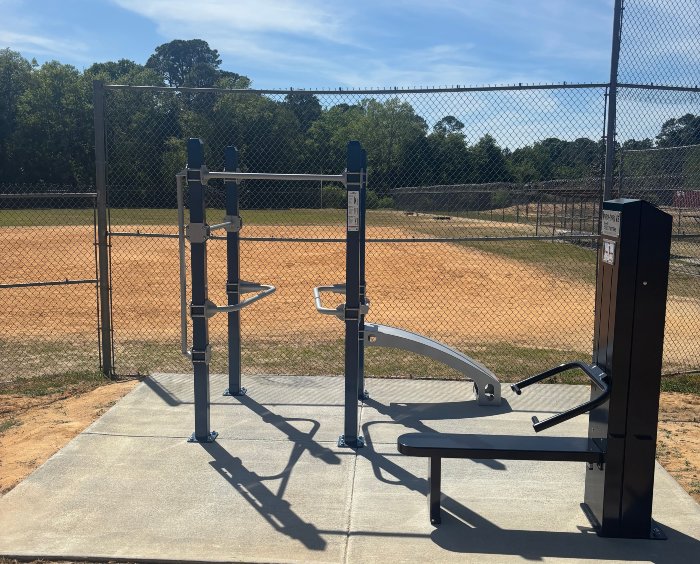
Instructional Placards and Guided Fitness Programming
Benefits of Instructional Placards
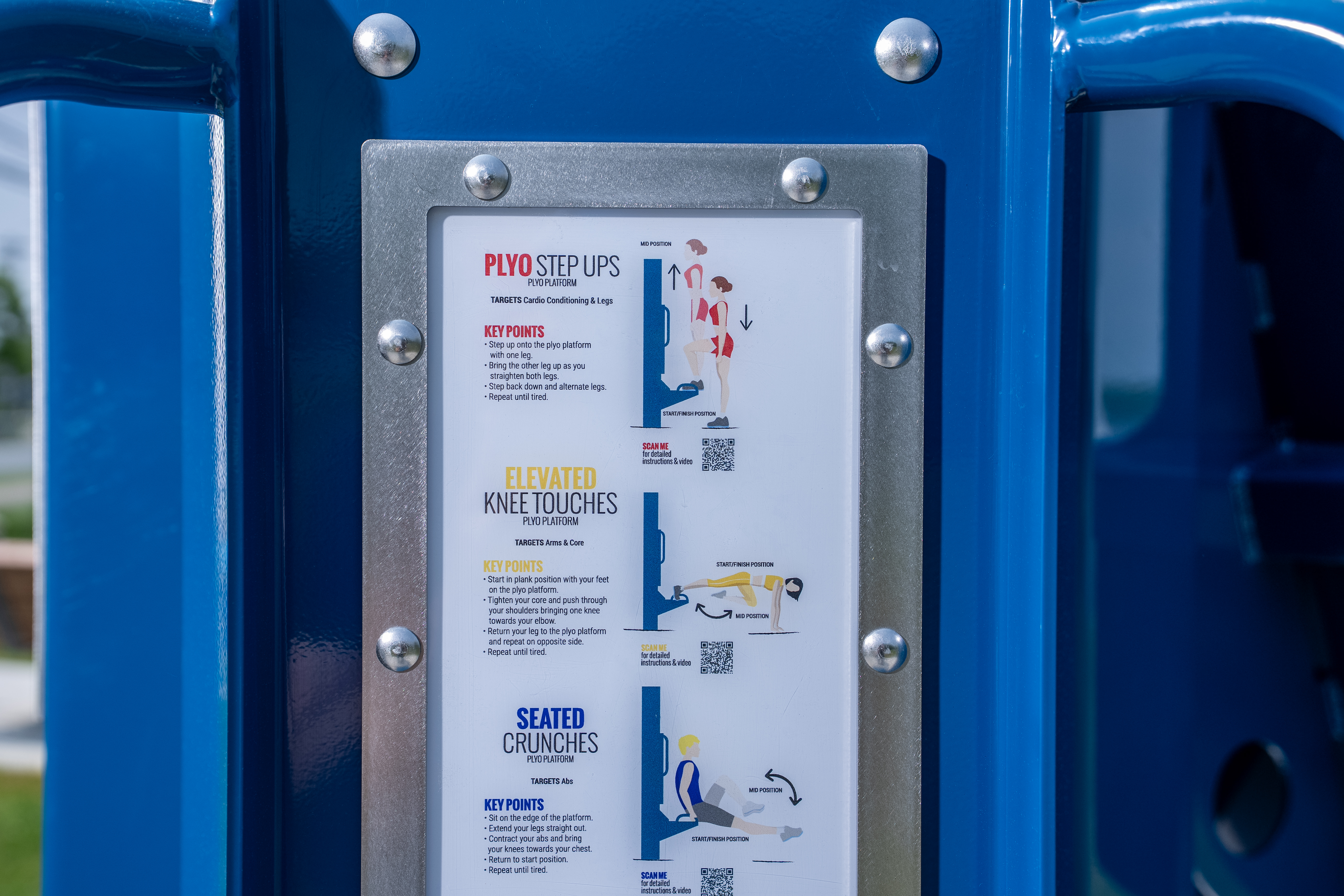
Here at Outdoor-Fit, we fully understand the importance and significance of proper guidance for juveniles. This is why our correctional fitness equipment features instructional placards that help to build confidence and promote safe exercise. Our placards show color-coded visual examples of how to properly perform each exercise and include QR codes that staff can scan to view detailed how-to videos for each station, with key points indicated.
Structured Workout Programs for Juvenile Rehabilitation
In addition to the how-to videos, the QR codes provide fitness programming to create structured routines. Administrators can scan our QR codes and select different levels, such as advanced, intermediate, and beginner, and different exercises to choose from, such as:
- Upper body
- Lower body
- Core
- H.I.I.T.
A set number of sets and reps will be provided, and administrators can create fitness classes in which exercises are either led by them or printed on the wall and shared with the juveniles.
Organized fitness routines help juveniles develop:
- Consistency
- Discipline
- Accountability
- Goal-setting habits
Most juvenile detention centers already follow very structured schedules throughout the day. Fitness programming naturally supports this approach and fosters activities that benefit both the physical and mental health of each juvenile.
Adjustable Fitness Equipment for All Skill Levels
Why Adjustability Matters in Juvenile Facilities
Youth populations vary in height, strength, and ability. Choosing the right correctional fitness equipment that allows users to adjust weight resistance or height settings is fundamental in the success of the equipment. Our products, such as the Apollo Multigym and the Helios Multigym, offer adjustable weight resistance and assisted weight training so everyone can exercise properly, regardless of their prior fitness level.
Security and Durability in Correctional Fitness Equipment
Meeting Correctional Safety Standards
Even with a stronger focus on rehabilitation and growth, juvenile detention fitness equipment must still meet the strict safety and durability standards of today’s correctional facilities. These standards include:
- Tamperproof hardware
- Heavy-duty steel construction
- Weatherproof finishes for outdoor recreation
- Minimal maintenance
- No removable parts
- No exposed cables
Durable equipment helps facilities create safer recreation environments and safer operations for both juveniles and staff.
Conclusion: Balancing Safety, Structure, and Rehabilitation
When properly planned, fitness spaces in juvenile detention centers are valuable tools for rehabilitation and positive behavioral change. By designing recreation areas that balance security and development, juvenile detention centers can create environments that support healthier routines and positive outcomes for their youth.
To contact us at Outdoor-Fit today and learn more about how our correctional fitness equipment can benefit your juvenile facility, click here: https://corrections-fit.com/contact-us
FAQs About Juvenile Detention Fitness Equipment
Find answers to the most common questions about juvenile detention fitness equipment, safety standards, and program design. This section helps administrators understand how to choose the right solutions, ensure secure operation, and create structured fitness environments that support rehabilitation, participation, and long-term positive outcomes for youth in correctional facilities.
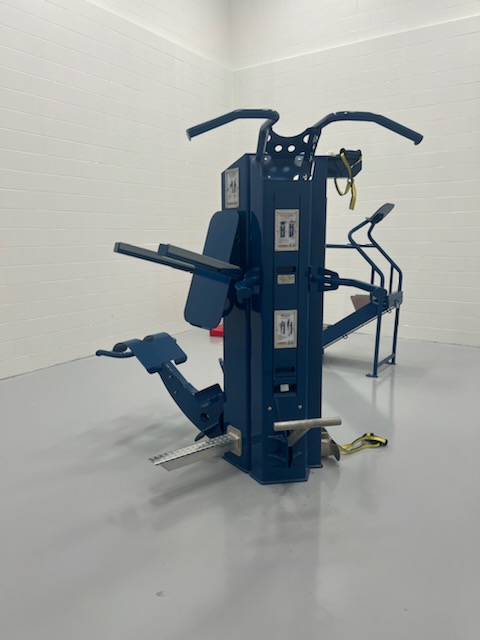
Yes! All our products that are used in adult facilities can also be used in juvenile facilities. Certain products are adjustable, and most have instructional placards that can be beneficial for juvenile populations.
No! All our products are tamperproof, with no removable parts, exposed cables, or exposed pulleys, making them safe for juvenile facilities.
Yes! Our entire Cali-Line, as well as a few of our multigyms, have no moving parts and require zero maintenance once installed.